· 7 min read · The Pour Room
From creek to candle
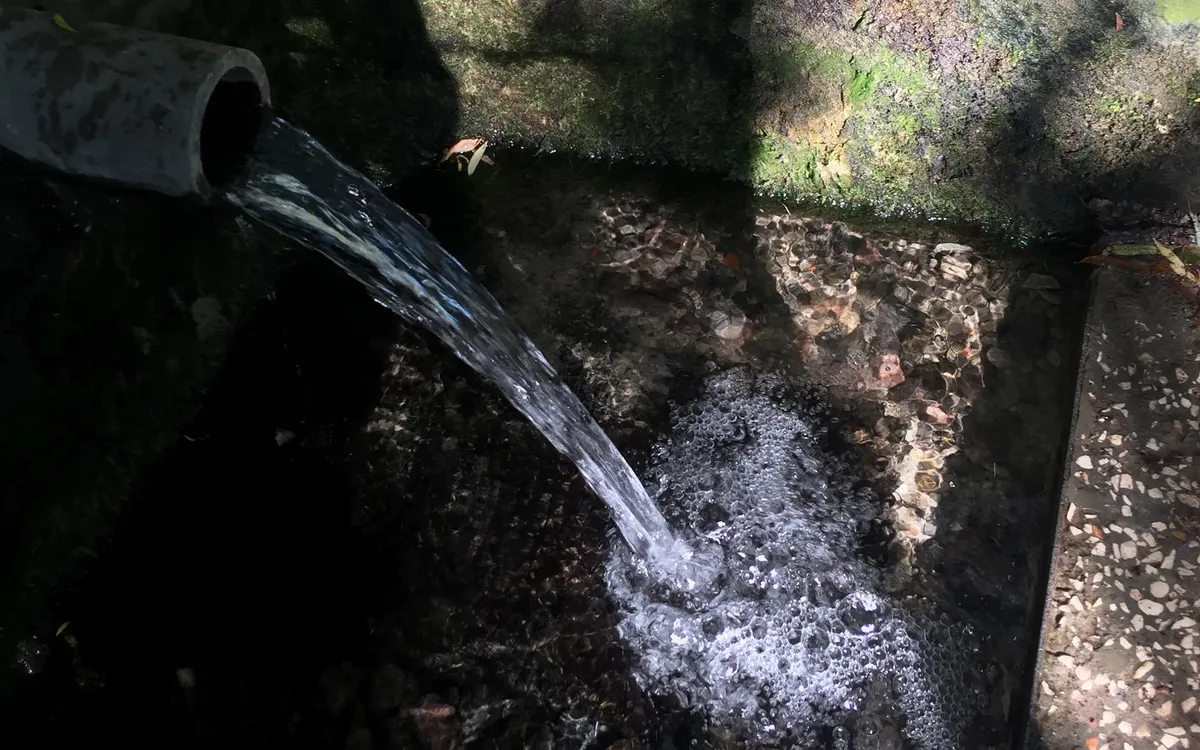
Every Oak & Creek scent starts somewhere you could stand. Not a mood board or a trend report, but a place: a gravel bar, a cedar glade, a porch in November. Here's how one of those places, a spring coming up out of the gravel, became Springhouse.
It starts with a notebook
We keep a small notebook in the truck. When a place smells like something, we write it down right there, as specifically as we can.
For Springhouse, the first entry reads: Spring at the foot of the bluff. Water's so cold it hurts. Wet limestone, the green-pepper smell of watercress, something citrusy from a plant we can't name. Moss on the wall. Cedar up the hill.
That last line matters. A place is never one smell. It's a foreground, a middle, and a background, the same way a candle has top, heart, and base notes. Most of our work is figuring out which is which.
Translating a place into notes
Back in the pour room, we sort the notes from the notebook:
- Top notes are what hits you first and fades fastest. For Springhouse, the bright, green edge: lemon verbena and cucumber.
- Heart notes are the body of the scent, what you smell once the candle has been burning a while: cool limestone and peppery watercress.
- Base notes are what lingers in the room after you blow it out: white cedar from up the hill, and a soft, clean musk.
Then we start blending, a few drops at a time, in small glass vials. The first drafts are almost always wrong. Our first Springhouse smelled like a cucumber sandwich. The second smelled like a swimming pool. The seventh was close.
Test pours
Once a blend smells right in the vial, it has to work in wax, which is a different thing entirely. Some notes get louder when heated. Others vanish.
We pour test candles in every size and both wicks, let them cure, and burn them on the long shelf by the window, sometimes a dozen at once. We take notes on how far the scent carries, how it changes after an hour, and what the room smells like the next morning.
Springhouse took four rounds of test pours. The limestone note kept disappearing in the Crock, so we adjusted the balance until it held up across all three sizes.
Pouring the batch
When a scent is ready, we pour it in a batch of 48, which is how many jars fit on the long oak table.
The springhouse helps here. The stone walls keep the room at a steady temperature all year, and that steadiness is the secret to a smooth candle. We heat the wax, blend in the fragrance at just the right temperature, and pour each jar by hand from a steel pitcher. Then we leave them alone. No fans, no drafts, no rushing.
Fourteen days on the shelf
This is the part people are surprised by. After pouring, every batch cures on the back shelves for fourteen days before it ships.
Curing gives the fragrance time to bind fully with the wax. A candle burned the day after it's poured smells fine. One burned after two weeks smells like the place we were trying to capture. It's the single biggest difference between a good candle and a great one, and the reason we'd rather sell out than ship early.
The last test
Before a batch is packed, we pull one candle at random and burn it on the windowsill. If it burns evenly, smells right, and the wick behaves, the batch gets its number written on the label by hand, and it's ready to go.
Springhouse is on batch 021 now. It still smells like the foot of the bluff on the hottest day of August, with water so cold it hurts.
That's the whole idea. Bring the hollow home.
Oak & Creek Candle Co. is a fictional brand created by Blowers Creative. The places, people, and batches in this story are invented.
Shop the scents in this story

Price: From $18

Price: From $18


Price: From $18